Why Most AI Generated Blogs Fail
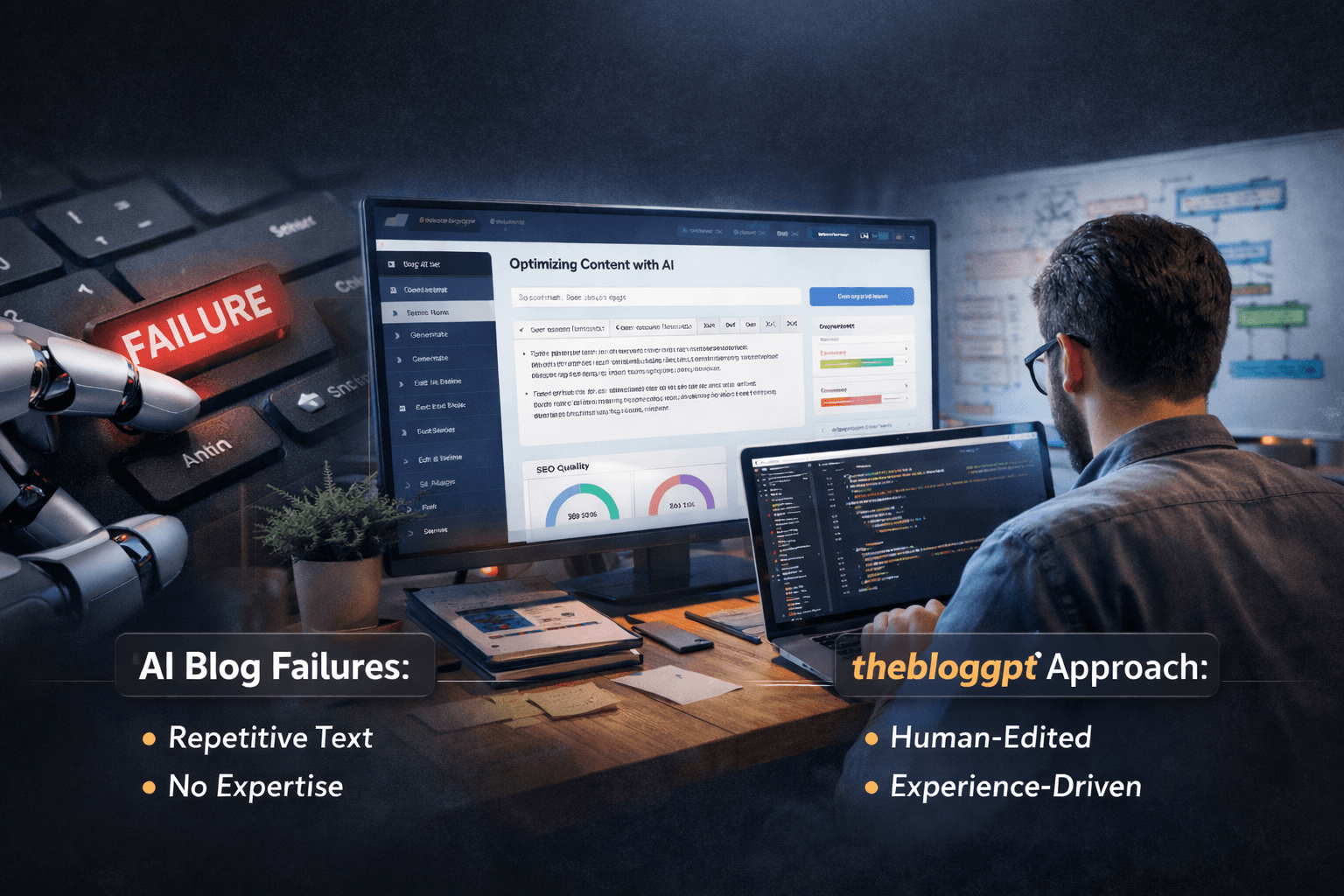
AI-generated blogs are everywhere in 2026.
And most of them are ignored.
Not because AI is useless but because most platforms and users abuse it. Search engines don’t reward content just because it’s long or generated quickly. They reward clarity, experience, and usefulness.
After building and testing thebloggpt, one truth became unavoidable:
AI doesn’t ruin blogs. Lazy usage does.
This article breaks down why most AI generated blogs fail and how thebloggpt is intentionally designed to avoid those failures.
🚫 Why Most AI Generated Blogs Fail
1. They All Sound Identical
Most AI blogs follow the same predictable pattern:
vague introductions
recycled points
zero strong opinions
no real world context
Readers recognize this instantly. So does Google.
If your blog feels like it could have been written by any platform, it won’t be remembered by any reader.
2. No Real Experience Behind the Words
AI can summarize what already exists.
It cannot replace first hand experience.
Most AI blogs fail because they include:
no testing
no mistakes
no lessons learned
Search engines now prioritize Experience + Expertise, not word count or fancy phrasing.
3. Keyword Stuffing Disguised as SEO
Many platforms promise “SEO optimized AI blogs” but deliver:
unnatural keyword repetition
robotic sentence structures
bloated paragraphs
That might work briefly but it collapses after one algorithm update.
SEO without readability is useless.
4. Publishing Without Editing
Raw AI output is a draft, not content.
Most failed AI blogs are published without:
restructuring
simplification
human judgment
opinion based refinement
That’s why they feel empty, even when they’re long.
✅ How thebloggpt Does It Differently
thebloggpt was built with one clear principle:
AI should assist thinking, not replace it.
Here’s how that principle shows up in the platform.
1. Human First Content Creation
thebloggpt encourages users to:
define intent before generating
add context and direction
edit before publishing
AI is used for clarity and structure, not fake authority.
2. Experience-Driven Blogging
thebloggpt is designed for:
developers
creators
builders
People who actually do the work.
Blogs that include:
real problems
real solutions
real outcomes
naturally outperform generic AI content.
3. Clean SEO, Not Spam SEO
Instead of tricks, thebloggpt focuses on:
semantic headings
readable paragraph flow
natural keyword placement
No keyword stuffing.
No short lived SEO hacks.
4. Editing Is Part of the Workflow
thebloggpt treats AI output as:
a starting point
not the final product
Good blogs are edited blogs. The platform is built around that reality.
🧠 The Right Way to Use AI for Blogging
AI works best when used to:
brainstorm ideas
organize thoughts
improve clarity
overcome writer’s block
AI fails when used to:
fake expertise
mass-produce low effort posts
avoid thinking
The difference between ranking content and ignored content is human judgment.
🔥 The Real Truth
AI blogging is easy.
Building trust with readers is hard.
thebloggpt exists for people who want to:
write better, not just faster
use AI responsibly
build long term credibility
If you want shortcuts, AI will expose you.
If you want quality, AI will amplify you.
✅ Conclusion
Most AI generated blogs fail because they remove the human from the process.
thebloggpt succeeds because it keeps humans in control and uses AI where it actually helps.
That difference matters.
You may also like