Stage 1 Remapping: The Ultimate First Modification for Turbo Cars?

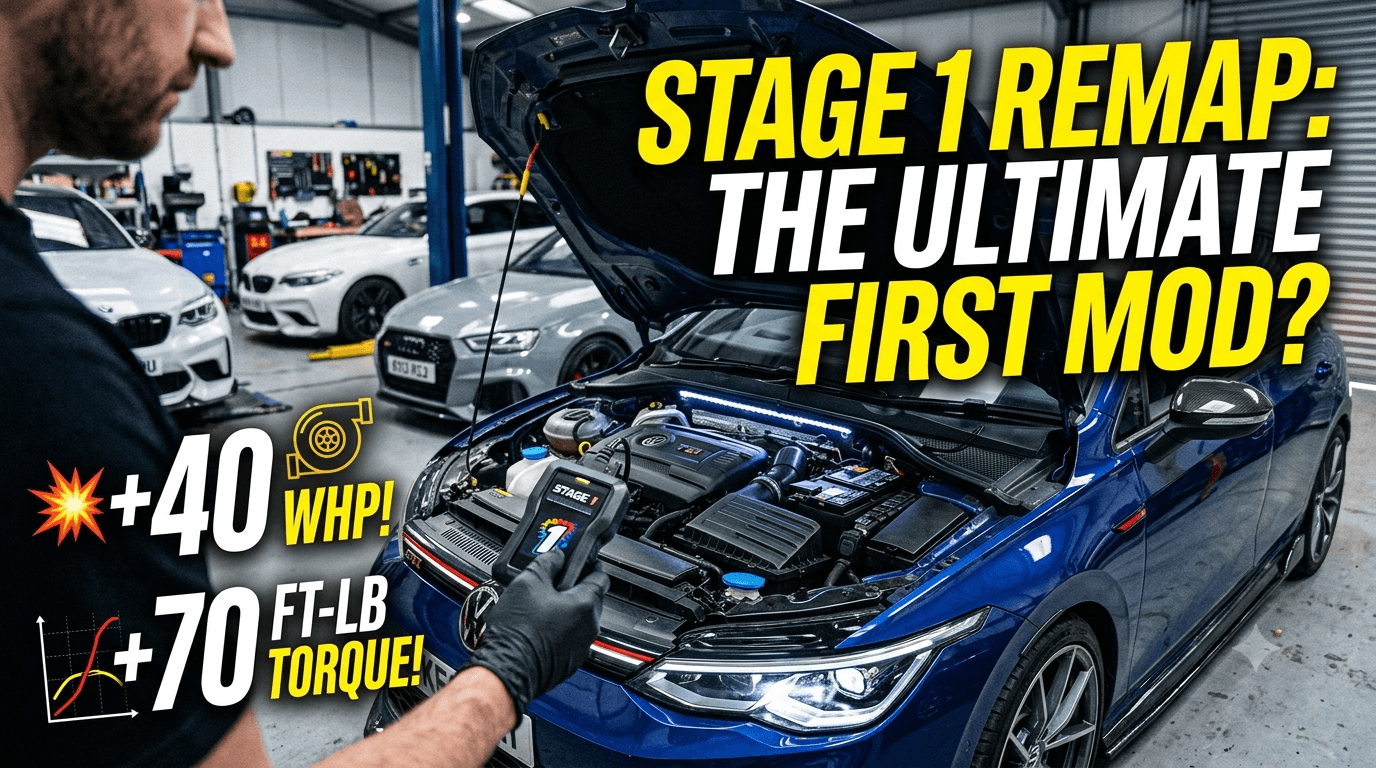
For many automotive enthusiasts, the thrill of a turbocharged engine is just the beginning. The potential for more power, sharper response, and an overall enhanced driving experience often leads to the question: what’s the best first step in modification? Enter Stage 1 ECU remapping, a popular and highly effective upgrade that promises significant performance gains without touching a single piece of hardware under the hood. It’s widely celebrated as the ultimate entry point for unlocking your turbo car's hidden capabilities, providing a remarkable boost in enjoyment and performance.
Key Takeaways
- Stage 1 remapping optimizes your engine's software for substantial power and torque gains without hardware changes.
- Expect realistic increases of 15-30% in horsepower and torque, transforming drivability.
- Fuel economy can remain similar or even improve under normal driving, but spirited driving will consume more.
- Reliability is generally maintained with a reputable tune on a well-maintained engine, but proper maintenance becomes even more critical.
- It's considered the best "bang-for-buck" modification due to its cost-effectiveness and significant impact.
What is Stage 1 Remapping? Unlocking Your Engine's Potential
Stage 1 remapping, often referred to as an ECU tune, is a software modification applied to your car's Engine Control Unit (ECU). The ECU is essentially the brain of your car's engine, dictating how various components operate. From fuel injection timings and ignition advance to turbocharger boost pressure and throttle response, the ECU manages it all based on factory-set parameters.
Manufacturers design these parameters to be quite conservative. They must account for a vast range of factors, including varying fuel qualities globally, extreme climates, diverse driving styles, and strict emissions regulations. This built-in headroom means there's often significant performance left on the table, particularly in turbocharged vehicles.
How the ECU Works
Your car's ECU contains intricate maps that define how the engine should behave under different conditions. These maps control critical engine functions in real-time. For instance, if you press the accelerator pedal, the ECU interprets this input and adjusts fuel delivery, spark timing, and boost to deliver the requested power, all within its programmed limits.
Factory ECUs are calibrated to ensure longevity across a broad spectrum of users and environments. This broad approach, while safe, doesn't always optimize for maximum performance within safe operational limits for a well-maintained vehicle.
The Tuning Process
A Stage 1 remap involves flashing your ECU with new, optimized software. This new software carefully adjusts the existing parameters. Key areas typically modified include:
- Increased Turbocharger Boost Pressure: One of the primary ways to gain power in a turbo car.
- Optimized Fuel-Air Ratio: Fine-tuning the balance for better combustion efficiency and power.
- Adjusted Ignition Timing: Advancing the spark to create a more powerful combustion event.
- Revised Throttle Response: Making the car feel more immediate and responsive.
- Removed Speed Limiters: If present, these are often removed.
Crucially, Stage 1 tuning does not require any physical changes to your car's hardware. It relies solely on the capabilities of your existing engine components, making it a truly software-only upgrade.
Realistic Performance Gains: Horsepower and Torque
The most exciting aspect of Stage 1 remapping is the tangible increase in power. For many turbocharged engines, owners can expect substantial gains in both horsepower and torque. While specific figures vary widely depending on the make, model, and engine, common increases often range from 15% to 30% over stock.
For example, a common 2.0-liter turbocharged engine might see an increase of 30-60 horsepower and a similar or greater percentage increase in torque. This isn't just a slight bump, it's a significant transformation that makes the car feel much more potent and eager.
Impact on Drivability
Beyond the headline horsepower figures, the real-world impact on drivability is often what impresses owners most. You'll typically notice:
- Stronger Acceleration: The car pulls harder through the gears, especially in the mid-range.
- Improved Responsiveness: The engine reacts more quickly to throttle inputs, reducing lag.
- Better Overtaking Power: Safer and more confident maneuvers on highways.
- A More Engaging Drive: The car feels livelier and more athletic overall.
This enhanced performance isn't just for track days; it makes daily driving more enjoyable, giving you that extra surge of power when you need it.
Fuel Economy and Daily Driving
A common misconception is that more power automatically means significantly worse fuel economy. While it's true that driving aggressively with a tuned engine will consume more fuel, a well-executed Stage 1 remap can actually maintain or even slightly improve fuel efficiency under normal, sensible driving conditions.
The reason for this lies in the optimization of the engine maps. By making combustion more efficient and improving torque delivery, the engine doesn't have to work as hard to achieve the same speed or acceleration. This can mean less throttle input is required for cruising, potentially leading to better miles per gallon.
However, it's important to be realistic. If you're constantly taking advantage of the newfound power, pushing the engine to its limits, fuel consumption will undoubtedly increase. The key is moderation: drive responsibly, and your fuel economy might surprise you positively; drive like a racer, and expect to visit the pump more often.
Reliability Concerns and Longevity
One of the most frequently asked questions about remapping is its effect on engine reliability. For a Stage 1 tune, particularly from a reputable tuner, the impact on engine longevity is generally minimal, provided the engine is healthy and well-maintained to begin with.
Reputable tuners develop their Stage 1 maps to operate within the safe tolerances of the engine's original hardware. They understand the factory limits of components like pistons, connecting rods, and the turbocharger itself. While power is increased, it's typically done by optimizing existing parameters rather than pushing components past their breaking point.
Engine Stress
It's undeniable that increasing power puts more stress on an engine. Stage 1 tunes typically result in higher cylinder pressures and increased heat. However, modern turbocharged engines are often over-engineered from the factory, designed to handle a certain amount of stress beyond their stock output.
The key is staying within these engineering margins. An aggressive, poorly developed tune that prioritizes maximum numbers over safety can indeed lead to premature wear or failure. This is why choosing a trusted tuner is paramount.
Importance of Maintenance
With a Stage 1 tune, maintaining your vehicle becomes even more critical. Increased power demands better care. Key areas to focus on include:
- Oil Change Intervals: Adhere strictly to or even shorten recommended oil change intervals using high-quality synthetic oil. Oil degrades faster under higher heat and stress.
- Spark Plugs: Consider upgrading to colder spark plugs if recommended by your tuner, and replace them more frequently.
- Air Filter: Ensure your air filter is clean for optimal airflow.
- Coolant and Other Fluids: Keep all fluid levels topped up and replaced according to manufacturer schedules.
- General Vehicle Health: Address any pre-existing issues or warning lights before tuning. A healthy engine is essential for a reliable tune.
By investing in diligent maintenance, you significantly mitigate potential reliability risks associated with a Stage 1 remap.
Why Stage 1 is the Ultimate First Modification
When considering modifications for a turbocharged car, Stage 1 remapping consistently stands out as the best "bang-for-buck" first upgrade. Its appeal lies in its efficiency, cost-effectiveness, and transformative impact on driving dynamics.
Cost-Effectiveness
Compared to hardware upgrades like larger turbochargers, intercoolers, or exhaust systems, a Stage 1 remap is significantly more affordable. For a fraction of the cost of physical modifications, you can achieve a dramatic increase in performance that truly changes how your car feels. It's a highly accessible entry point into performance tuning.
Simplicity and Reversibility
Since Stage 1 is purely a software modification, there's no need for mechanical installations or complicated component swaps. The process typically involves connecting to the car's diagnostic port and flashing the new software. This also means it's generally reversible, allowing you to return to the factory tune if needed, for instance, before selling the vehicle or for warranty claims.
Foundation for Future Upgrades
While Stage 1 is a complete modification in itself, it also serves as an excellent foundation for future performance enhancements. If you decide to pursue further upgrades like an improved intake, downpipe, or intercooler, a Stage 1 tune prepares your ECU to adapt to these changes, often paving the way for a "Stage 2" or even "Stage 3" tune tailored to those hardware modifications.
"For the price of a few tires, you can transform the entire character of your turbocharged car with a Stage 1 remap. It's truly a performance revolution in a software package."
Choosing a Reputable Tuner
The success and reliability of your Stage 1 remap hinge almost entirely on the quality of the tune and the expertise of the tuner. Do your research diligently:
- Reputation and Reviews: Look for tuners with a strong track record and positive customer feedback for your specific car model.
- Dyno Testing: A good tuner will often provide dyno charts showing before-and-after power figures, demonstrating the actual gains.
- Support and Warranty: Inquire about any support offered post-tune and if they provide any warranty for their software.
- Custom vs. Off-the-Shelf: While many Stage 1 tunes are "off-the-shelf," a tuner who can slightly tailor the map to your specific vehicle (even without hardware changes) is often a good sign.
Avoid cheap, generic tunes that promise unrealistic gains without proper development, as these are the ones most likely to compromise reliability.
Frequently Asked Questions
Will Stage 1 void my warranty?
Technically, modifying the ECU software can void parts of your powertrain warranty, as manufacturers can claim the modification caused a failure. However, proving this connection can be difficult for them. Some tuners offer programs that attempt to hide the tune, but no method is foolproof. It's a risk factor to consider before proceeding, especially with newer vehicles still under comprehensive warranty.
Do I need any other modifications for Stage 1?
No, a true Stage 1 remap is designed to work safely and effectively with your car's stock hardware. While a high-flow air filter or upgraded spark plugs might offer marginal improvements or be recommended by some tuners, they are not strictly necessary for a Stage 1 tune to function correctly.
How long does Stage 1 tuning take?
The actual flashing process for a Stage 1 remap typically takes anywhere from 30 minutes to a few hours, depending on the car model and the tuning method. Some tuners may perform diagnostics or a pre-tune health check, extending the overall time slightly.
Can I revert my car back to stock?
Yes, in almost all cases, a reputable tuner can flash your car's original factory software back onto the ECU. This process is usually straightforward and can be done if you need to take the car to a dealership or wish to sell it with the original tune.
Conclusion
Stage 1 ECU remapping offers an incredibly compelling package for turbocharged car owners looking to enhance performance without diving into complex hardware upgrades. It delivers a noticeable, often dramatic, improvement in horsepower, torque, and overall driving dynamics, transforming the feel of your vehicle for a relatively modest investment. By understanding what it entails, recognizing the importance of maintenance, and choosing a knowledgeable tuner, you can unlock a new level of enjoyment and capability from your turbo car, making Stage 1 remapping a truly ultimate first modification.
You may also like



Comments(0)
Be the first to comment.